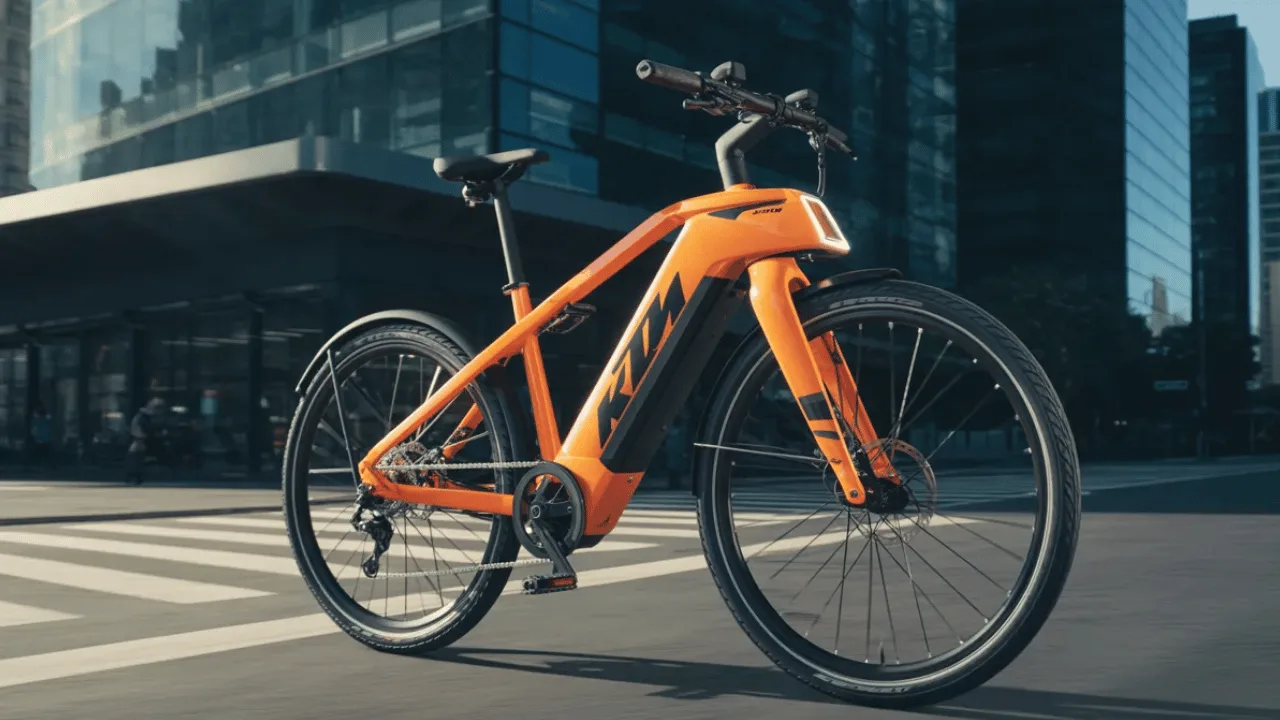
The conversation around electric mobility in India has mostly focused on scooters, motorcycles, and cars. However, 2026 appears to be bringing a noticeable shift, with electric cycles gaining attention as a practical urban transport option. In this space, KTM has stepped in with its Electric Cycle 2026, aiming to blend performance-inspired design with everyday city usability.
Unlike conventional bicycles or basic e-cycles, this new entry is positioned as a lifestyle-oriented urban mobility solution. Early details suggest the focus is not on replacing motorcycles, but on offering a clean, efficient alternative for short daily travel, fitness-conscious riders, and traffic-heavy city environments.
A Sporty Design That Reflects KTM’s Racing DNA
Design plays a key role in how electric cycles are perceived, especially among younger urban riders. The KTM Electric Cycle 2026 carries sharp lines, a rigid frame, and a geometry that looks inspired by performance bikes rather than casual commuters.
The overall styling appears muscular and aggressive, which sets it apart from many electric cycles currently available in India. The frame design also hints at durability, an important factor for Indian road conditions. While it is still a pedal-assisted cycle, the visual identity leans more toward sport than leisure, aligning with KTM’s long-standing association with performance engineering.
Assisted Electric Range Designed for City Use
One of the most discussed aspects of the KTM Electric Cycle 2026 is its claimed assisted range of up to 120 km. This range figure applies to pedal-assist mode, where the electric motor supports the rider rather than replacing pedaling entirely.
For urban users, this range could translate into several days of commuting on a single charge, depending on distance and assist level. The cycle is expected to feature multiple assist modes, allowing riders to balance power support and battery efficiency based on traffic conditions, road gradient, and personal riding style.
Such range figures place the cycle firmly in the daily-commute category rather than recreational-only use.
Urban Mobility and Changing Travel Habits
Indian cities continue to face growing congestion, rising fuel costs, and limited parking. Electric cycles are increasingly being seen as a middle ground between bicycles and motorized two-wheelers.
The KTM Electric Cycle 2026 enters this space at a time when short-distance commuting is being rethought. For distances under 10–15 km, electric cycles offer flexibility, low running costs, and easier navigation through crowded roads. They also avoid licensing complexities and high maintenance expenses associated with traditional vehicles.
This shift reflects a broader trend where urban mobility is becoming more modular, with people choosing different modes of transport based on purpose rather than relying on a single vehicle.
Monthly EMI Option and Accessibility
Reports indicate that the KTM Electric Cycle 2026 may be offered with a monthly EMI option starting around ₹1,999. While final pricing and financing details may vary by city and dealer, such payment structures highlight an effort to make electric cycles more accessible to salaried professionals, students, and first-time EV users.
This approach aligns with how mobility products are increasingly being positioned in India, where affordability and flexible payment options play a major role in adoption decisions.

Positioning in India’s Growing E-Cycle Market
The electric cycle market in India is still evolving, with buyers gradually moving beyond entry-level models. KTM’s entry suggests growing confidence in demand for premium, performance-styled electric cycles.
Rather than competing directly with budget-focused brands, this model appears aimed at urban riders who value design, brand credibility, and a balanced mix of fitness and mobility. Its success will likely depend on real-world range performance, after-sales support, and long-term battery reliability.
What This Means for Urban Commuters
For many city dwellers, especially those working within a limited travel radius, electric cycles are becoming a realistic alternative rather than a novelty. The KTM Electric Cycle 2026 adds to this shift by bringing a familiar performance-oriented brand into the category.
If executed well, it could influence how electric cycles are perceived—not just as eco-friendly tools, but as practical, stylish daily companions for modern urban life.
Frequently Asked Questions (FAQs)
No. It is a pedal-assisted electric cycle, meaning the motor supports pedaling rather than replacing it entirely.
The claimed assisted range is up to 120 km, depending on riding mode, terrain, and usage conditions.
Electric cycles with pedal assist generally do not require a license or registration, as long as they fall within regulatory limits.
It is aimed at urban commuters, fitness-conscious riders, and users looking for an efficient short-distance mobility option.
EMI availability may vary by region and dealer. Final details are expected closer to the official rollout.