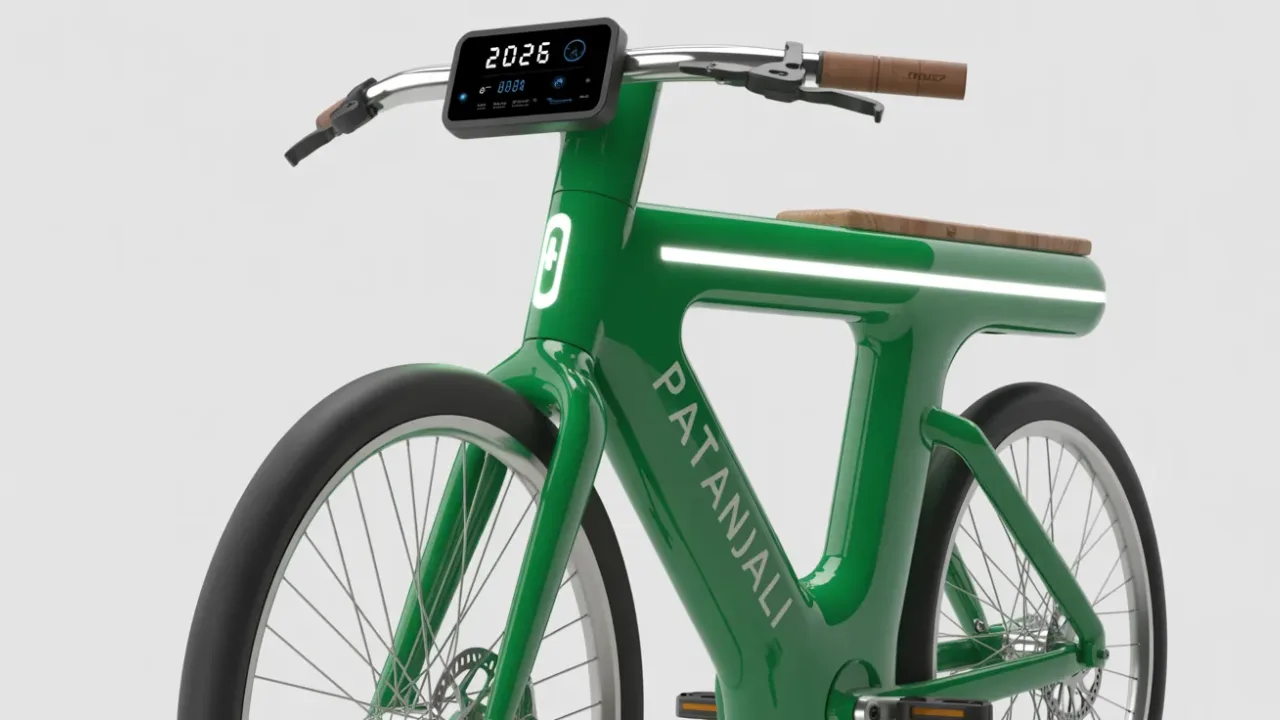
India’s electric mobility space is gradually expanding beyond cars and scooters. In 2026, electric cycles are emerging as a practical option for daily travel, fitness, and cost-conscious commuting. One of the names drawing public attention is the Patanjali Green Electric Cycle 2026, which is being discussed for its claimed 95 km range, simple design approach, and a reported EMI starting near ₹1,249.
This development reflects a broader shift in how Indian consumers are looking at mobility. Instead of high-speed electric vehicles alone, there is increasing interest in lighter, health-oriented options that reduce fuel dependence and daily travel costs.
A Shift Toward Utility-Focused Electric Cycles
Electric cycles in India are no longer seen only as niche fitness products. They are increasingly viewed as tools for short-distance commuting, especially in cities and semi-urban areas. Rising fuel prices, traffic congestion, and parking challenges have pushed many users to consider alternatives that are simple and economical.
The Patanjali Green Electric Cycle 2026 appears to fit into this category. Rather than focusing on speed or aggressive styling, the emphasis seems to be on everyday usability. The design discussion around the cycle highlights comfort, pedal-assist riding, and low running costs, which aligns with how electric cycles are typically used in Indian conditions.
Claimed 95 km Range and What It Means in Daily Use
A talking point around the Patanjali Green Electric Cycle 2026 is its claimed range of up to 95 km. For electric cycles, range figures are often influenced by riding mode, terrain, rider weight, and how much pedaling support is used.
In practical terms, even a moderate real-world range can cover most daily needs. Office commutes, local errands, and short school or college travel usually fall within 10–30 km per day. In such cases, an electric cycle with pedal assistance can reduce physical strain while still encouraging regular movement.
This balance between electric support and manual pedaling is one of the reasons electric cycles are being linked with health-focused mobility rather than purely motor-driven transport.
Health Angle Gains Attention Among Urban Riders
Health-conscious commuting is becoming a visible trend in India. Electric cycles allow users to stay active without the exhaustion associated with traditional cycling, especially in traffic-heavy or slightly hilly areas.
The Patanjali Green Electric Cycle 2026 is being discussed as an option for people who want light daily exercise integrated into their routine. Unlike scooters or motorcycles, electric cycles still require pedaling, which supports cardiovascular activity while reducing stress on joints.
This combination is particularly relevant for older riders, beginners, or people returning to cycling after a long break.
EMI Accessibility and Cost Conversations
Affordability remains a major factor for electric mobility adoption. Reports of an EMI option starting around ₹1,249 have drawn attention, especially among budget-conscious buyers.
Low EMI structures often make entry-level electric products more accessible to students, first-time earners, and families looking for secondary transport. While final ownership costs depend on pricing, battery life, and maintenance, electric cycles generally involve lower long-term expenses compared to fuel-based vehicles.
Charging costs are minimal, servicing is simpler, and there are fewer mechanical components involved.
How It Fits Into India’s Broader EV Ecosystem
Electric cycles occupy a unique position in India’s EV ecosystem. They do not require registration in many states, have minimal regulatory hurdles, and can be used on local roads with ease.
The Patanjali Green Electric Cycle 2026, based on current discussions, seems aimed at everyday riders rather than enthusiasts. This approach mirrors a wider industry trend where electric mobility solutions are being tailored for practicality instead of performance alone.
As cities look for ways to reduce congestion and pollution, electric cycles could quietly play a larger role in last-mile connectivity.
Conclusion
The Patanjali Green Electric Cycle 2026 reflects changing priorities in India’s mobility conversation. With a focus on health, affordability, and daily usability, electric cycles are gradually moving into mainstream awareness. While real-world performance and long-term reliability will define their success, the growing interest shows that Indian consumers are open to simpler, cleaner, and more balanced transport choices.
If electric cycles continue to evolve around accessibility and everyday needs, they may become a familiar sight on Indian roads in the coming years.

FAQs
Electric cycles are generally designed for short to medium daily travel. They are best suited for commuting, errands, and local use rather than long highway rides.
No. Electric cycles usually offer pedal-assist modes. Range figures often assume a mix of pedaling and motor support.
Office commuters, students, senior riders, and people looking for light daily exercise are likely to find electric cycles useful.
Maintenance costs are usually lower than fuel-based vehicles. Charging costs are minimal, and mechanical complexity is limited.
For short distances and city travel, electric cycles can be a practical alternative. However, usage depends on personal comfort, distance, and road conditions.