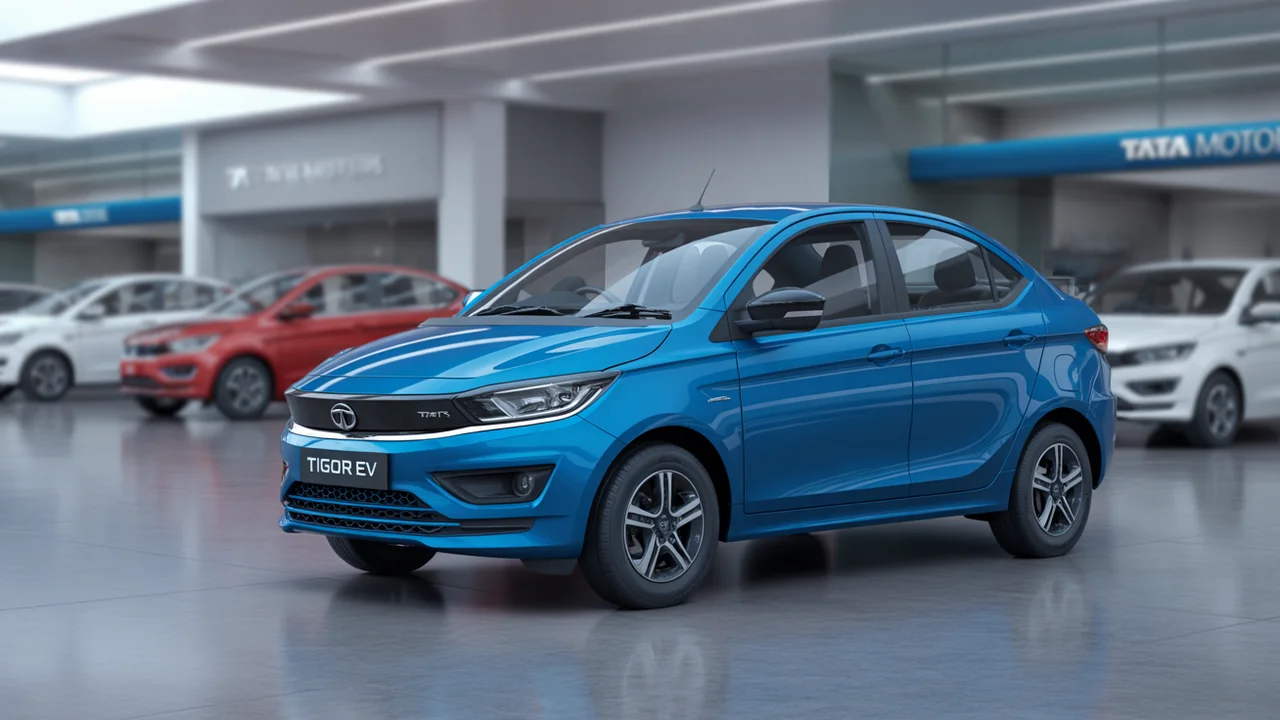
Tata Tigor EV 2026 Attracts Budget EV Buyers, 315 km Range And City-Friendly Design
The Tata Tigor EV 2026 is drawing attention from budget-focused electric vehicle buyers, helped by a claimed 315 km range and a compact sedan layout aimed at daily urban use. The model continues Tata’s push in the mass-market EV space, where affordability and running costs remain key purchase drivers.
Early interest is centered on the car’s practical footprint, straightforward feature mix, and positioning for commuters looking to switch from petrol vehicles without moving to a larger, costlier EV.
Range and real-world expectations
Tata Motors lists a 315 km range figure for the Tigor EV 2026, a number that is typically based on standardized test cycles. Actual driving range may vary depending on traffic conditions, driving style, air-conditioning use, temperature, and load.
For city users, range consistency and access to reliable charging are expected to be as important as the headline figure, especially for drivers without private parking or home charging.
City-friendly design and practicality
The Tigor EV’s compact dimensions are designed to support easier parking and maneuvering in dense traffic. As a sedan, it also targets buyers who prefer a traditional three-box shape over a hatchback or small SUV, while still prioritizing efficiency and everyday usability.
Buyers in this segment often weigh rear-seat comfort, boot space, and ride comfort for mixed commuting and occasional out-of-town travel, factors that can influence purchase decisions as much as range.
Value-led positioning in the budget EV segment
The Tigor EV 2026 is being discussed as a value-oriented option for first-time EV customers, including fleet operators and urban households looking to reduce fuel spend. In many markets, purchase incentives, charging tariffs, and financing terms can significantly affect overall ownership costs.
With competition increasing among entry-level and mid-range EVs, shoppers are expected to compare not only sticker prices but also warranty coverage, service network reach, battery support, and resale outlook.

Charging and daily ownership considerations
Charging speed, charger availability, and compatibility with home and public infrastructure are likely to shape buyer interest. For many budget EV owners, overnight home charging remains the most convenient option, while public fast charging is often used for top-ups or occasional longer routes.
Prospective customers typically evaluate daily running costs, maintenance needs, and software or connectivity features that can simplify route planning and energy monitoring.
Market outlook
The Tata Tigor EV 2026 arrives as demand continues to grow for affordable EVs suited to urban commuting. As pricing and variant details become clearer, the model’s reception will likely depend on how well its range, equipment, and charging experience align with cost-conscious buyers’ expectations.

FAQs
1) What is the claimed range of the Tata Tigor EV 2026?
Tata lists a claimed range of 315 km, though real-world range can vary with conditions and driving style.
2) Who is the Tata Tigor EV 2026 aimed at?
It is largely positioned for budget-conscious buyers, including city commuters and first-time EV customers.
3) Why is it described as city-friendly?
The compact footprint and urban-focused practicality are intended to make it easier to drive and park in congested areas.
4) What factors could affect ownership experience?
Charging access, charging speed, local electricity costs, service support, and driving conditions can all influence day-to-day use and running costs.