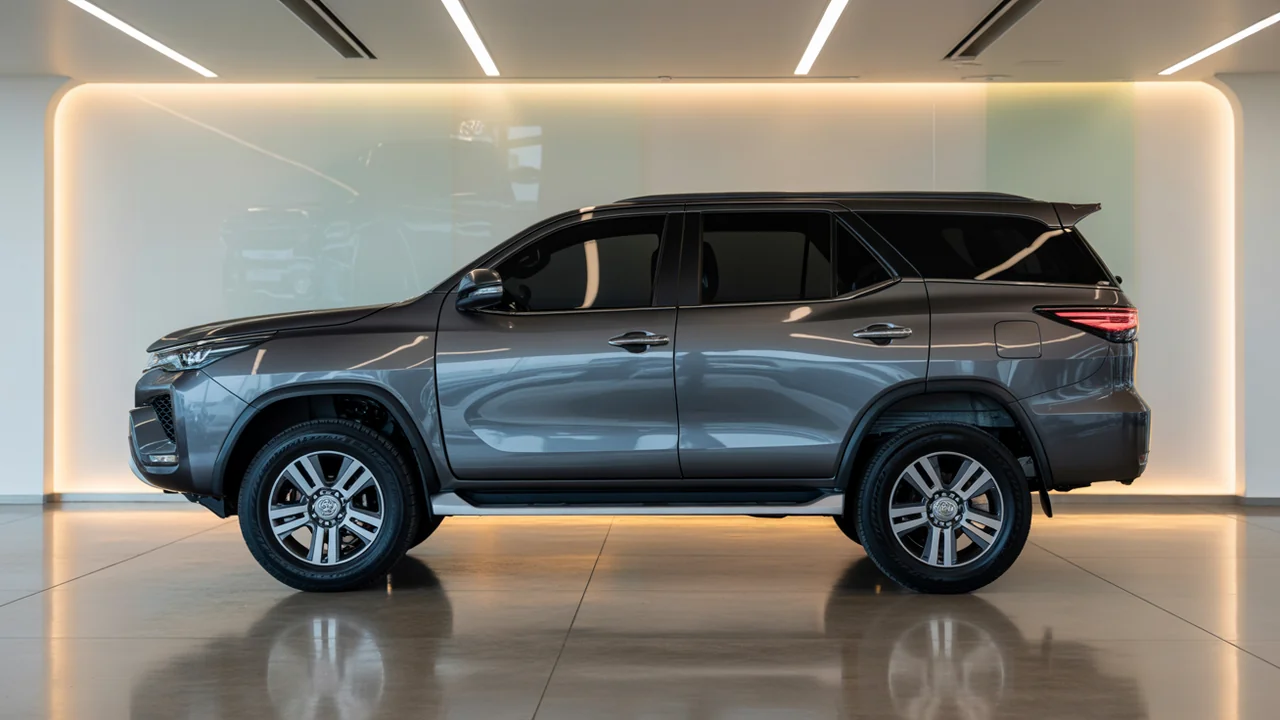
Toyota Fortuner 2026 Maintains Premium SUV Benchmark, 14 kmpl Mileage Backed By Brand Power
The Toyota Fortuner 2026 is being positioned as a continuation of the model’s long-standing role in the premium SUV space, combining a familiar road presence with incremental updates and a focus on reliability. Industry observers say the Fortuner’s appeal remains tied to its durability, resale value, and wide service footprint.
In many markets, the Fortuner continues to be viewed as a benchmark for ladder-frame SUVs that balance daily usability with touring and rough-road capability. The 2026 model year is expected to build on that reputation rather than dramatically change the formula.
Design and Road Presence
The Fortuner’s styling has traditionally emphasized a tall stance, strong shoulder lines, and a commanding front-end look. For 2026, the approach remains oriented toward a premium, rugged identity intended to appeal to buyers seeking a full-size SUV feel.
While final market specifications can vary, the overall design direction continues to prioritize practicality and visual toughness over radical styling shifts.
Cabin, Comfort, and Tech Expectations
Inside, the Fortuner is expected to maintain a family-focused layout with emphasis on comfort, storage, and long-distance convenience. Toyota typically aims for durable materials and an ergonomics-first approach, especially in vehicles used for both personal and utility roles.
Depending on the variant and region, buyers generally expect a modern infotainment setup, connected features, and a mix of convenience and safety technologies aligned with the segment’s current standards.
Claimed Mileage: 14 kmpl in Focus
A stated mileage figure of around 14 kmpl is drawing attention as fuel efficiency becomes a higher priority for large SUVs. Analysts note that real-world mileage can differ based on driving style, traffic, terrain, load, and maintenance condition.
Even so, the figure signals Toyota’s attempt to balance performance and running costs in a category where efficiency is often a key trade-off.

Performance and Capability Orientation
The Fortuner’s market identity remains closely linked to strong low-end torque, highway stability, and confident performance on uneven surfaces. As a ladder-frame SUV, it is commonly chosen by buyers who value robustness and the ability to handle varied road conditions.
Final powertrain and drivetrain availability may differ by country, including possible configurations that prioritize towing, touring, or off-road use.
Brand Power and Ownership Ecosystem
Toyota’s brand strength continues to be a central factor behind the Fortuner’s demand. The model benefits from a reputation for long-term reliability, wide service coverage, and relatively strong resale values in many regions.
For many buyers, these ownership factors can be as influential as features or design, particularly in the premium SUV category where long-term costs and downtime matter.

Market Position and Buyer Profile
The Toyota Fortuner 2026 is expected to remain targeted at customers seeking a premium SUV with a proven track record, whether for family use, long-distance travel, or mixed urban-rural driving. Competition in the segment remains intense, with rivals emphasizing technology, comfort, and performance.
However, the Fortuner’s established identity—combining durability with brand trust—continues to be a defining advantage.
FAQs
1) Is the Toyota Fortuner 2026 a new-generation model?
Toyota’s approach for 2026 is generally described as evolutionary, though exact updates can vary by market and variant.
2) Does the Fortuner 2026 really deliver 14 kmpl mileage?
A 14 kmpl figure is cited in reports, but actual mileage typically depends on driving conditions, load, terrain, and maintenance.
3) What makes the Fortuner a “premium SUV benchmark” for some buyers?
The model is often valued for durability, a strong service network, long-term reliability, and resale strength, alongside a rugged SUV stance.
4) Will features and safety tech be the same in every country?
No. Equipment levels, infotainment, and safety features commonly differ by region and trim level.